from 0 review
14 days 13 nights
Daily Tour
25 people
Chinese, English
The 14-day Everest Base Camp trek is an experience of a lifetime, blending adventure, culture, and the breathtaking beauty of Nepal’s Himalayas. Your trek in Nepal begins the moment you arrive in Kathmandu, where the team from Aau Nepal Expo warmly greets you with a floral garland and traditional blessing, ensuring you feel right at home. After settling in and enjoying a brief rest, the itinerary for the trek is shared, giving you a chance to ask questions and prepare for what lies ahead. Kathmandu’s vibrant Thamel district, buzzing with trekking shops, local eateries, and cultural highlights, offers the perfect setting to pick up last-minute gear or simply soak in the Nepali vibe. The next day starts with a scenic flight to Lukla, a small mountain town famous for its exciting airstrip and stunning views. This thrilling flight sets the tone for the adventure that follows.
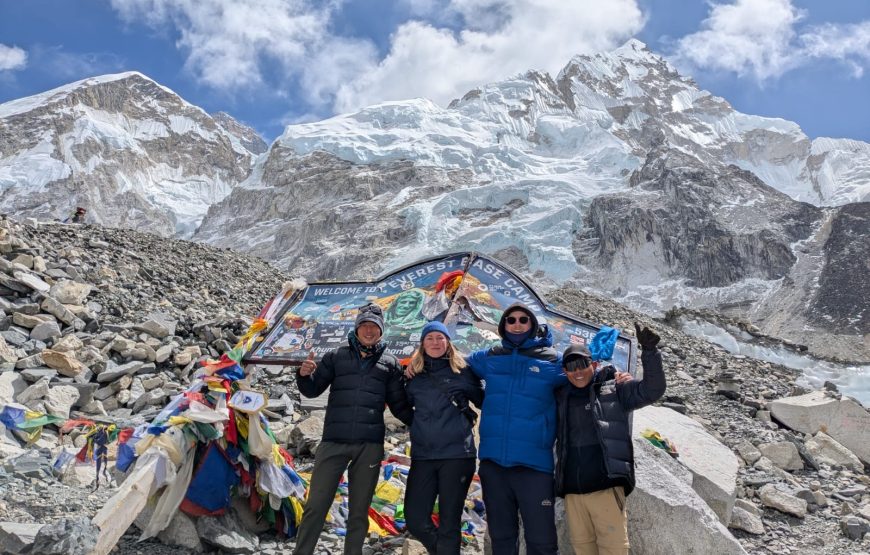
The trek itself is a journey through some of the most iconic landscapes and villages in the Everest region. From Lukla, the trail winds through lush forests, suspension bridges, and charming Sherpa villages, each more picturesque than the last. Stops like Phakding and Namche Bazaar provide opportunities to acclimatize and connect with local culture. Namche Bazaar, the bustling hub of the Everest region, is shaped like a giant horseshoe and surrounded by snow-capped peaks. A day spent here includes a visit to the Everest View Hotel, where you can enjoy panoramic views of the Himalayas, as well as stops at the Sherpa Culture Museum and Everest Photo Gallery. The trek continues through places like Tengboche, known for its ancient monastery, and Dingboche, offering unmatched views of Mount Ama Dablam and the surrounding peaks. Each step brings you closer to the grandeur of Everest Base Camp, with plenty of opportunities to take in the majestic scenery and create lifelong memories. Reaching Everest Base Camp is a moment of pure accomplishment. Nestled near the Khumbu Glacier, this iconic spot is where climbers begin their ascent to the summit of Mount Everest. The following morning, an early hike to Kala Patthar rewards trekkers with a breathtaking sunrise over Mount Everest and the surrounding peaks, a view that’s nothing short of magical. As the trek winds down, you’ll retrace your steps through villages like Gorakshep, Pheriche, and Namche Bazaar, finally reaching Lukla for a well-deserved celebration of your trek.
Aau Nepal Expo ensures that every part of this adventure is seamless, from the warm hospitality of your guides to the detailed planning that makes your trek safe and enjoyable. Book today not just a trek to Mt Everest but an unforgettable adventure that connects you to the heart of Nepal!
Best Time to Do the Everest Base Camp Trek
The Everest Base Camp Trek is accessible year-round, but seasonal variations significantly impact weather conditions, visibility, crowd levels, and overall trekking comfort. The fundamental key to safe enjoyable trekking lies in understanding seasonal variations.
The ideal time to experience spring’s scenic beauty and comfortable conditions occurs between March and May.
During spring season, the high season for trekking, trekkers can experience comfortable temperatures, clear skies and beautiful rhododendron flowers. The mountain scenery is magnificent, and the trekking routes remain in perfect shape. Tourist season popularity at Namche Bazaar makes it crowded because many people visit the area.
ummer/Monsoon (June–August): Least Recommended Season
During the monsoon season the trails become hazardous because of heavy rainfall, slippery paths, landslides and leeches. The season brings lush vegetation to the region but cloud cover typically hides mountain scenery. Low numbers of trekkers exist during this period and prices tend to be cheaper but the overall situation remains unfavorable.
Autumn (September–November): Best Overall Season
Everest Base Camp Trek reaches its peak of popularity during the autumn months. Clear post-monsoon skies, comfortable temperatures and safe trail conditions characterize this season. Due to heavy trekker activity during this period it is necessary to make advance reservations for accommodations and permits.
Winter (December–February): Challenging Yet Serene
Winter provides a solitary trekking experience yet its freezing temperatures and snow-covered mountain regions and scarce accommodation options make the experience difficult to navigate. The mountains present their most spectacular sight on sunny days yet hikers need to be equipped for harsh weather and possible trail interruptions.
Comfort & Safety Overview for the Everest Base Camp Trek
The Everest Base Camp Trek represents a demanding high-altitude adventure which provides comfort and safety through well-planned measures combined with expert guidance and structured support systems.
Accommodation and Meals
The accommodation at the trek includes teahouses and lodges which offer clean rooms with warm blankets and fundamental facilities. The villages of Namche Bazaar and Lukla provide better facilities which include hot showers and Wi-Fi access. The meals provided for trekkers consist of local Nepali food and international dishes that maintain physical strength and hydration during high-altitude climbs.
Guides and Porters
The trek is guided by licensed and experienced personnel who offer direction assistance as well as cultural knowledge and critical altitude adjustment guidance. Trekkers can hire porters to transport their heavy loads which helps them save their energy. Guides possess first aid skills and emergency response training and maintain communication devices for rescue operations when needed.
Altitude and Health Precautions
The trek schedule includes scheduled rest days to reduce the chances of altitude sickness. The guides keep close watch on trekkers for sickness indicators and may suggest either rest or descent. Before starting the trek trekkers should consult their healthcare provider and bring their personal medication. The larger villages maintain oxygen supplies together with medical kits that serve as emergency response equipment.
Emergency Support and Communication
Guides maintain contact through satellite phones and radios which enable them to rapidly reach rescue teams. Helicopter evacuation remains available for critical situations although it requires expensive costs. Weather monitoring systems enable trekkers to avoid dangerous conditions during their journey.
Your adventure begins with your arrival in Kathmandu, where a representative from Aau Nepal Expo will be waiting to welcome you and transfer you to your hotel. After checking in, you can relax and enjoy a free evening to recover from your journey or explore the local area at your own pace. This day is all about settling in and preparing for the exciting days ahead. You will spend the night at your hotel in Kathmandu, getting a good rest before your adventure starts.
Enjoy a scenic 35-minute flight to Lukla, the gateway to the Everest region. Begin your trek with a gentle descent through forest trails and suspension bridges to reach the village of Phakding. (Approx. 3–4 hours)
Continue your trek alongside the Dudh Koshi River, passing several villages and crossing iconic suspension bridges. After a challenging ascent, arrive at the lively trading hub of Namche Bazaar. (Approx. 7–8 hours)
Take a rest day to acclimatize. You can hike to the famous Hotel Everest View or Khumjung Village, offering excellent panoramic views of Everest and neighboring peaks. Return to Namche for overnight.
Trek along alpine trails with incredible views of Ama Dablam and Everest before reaching Tengboche, home to the largest monastery in the Khumbu region. (Approx. 6–7 hours)
Descend through forests and cross the Imja River, followed by a gradual climb through villages like Pangboche. Arrive in Dingboche, surrounded by scenic peaks and farmlands. (Approx. 5–6 hours)
Use this day to adapt to higher elevations. Optional hikes to Nangkartshang Hill or Chhukung offer dramatic mountain views. Rest and hydrate for the upcoming high-altitude trek.
Pass the memorial site at Thukla dedicated to fallen climbers, then ascend gently toward Lobuche. The trail provides striking views of glaciers and snow-covered ridges. (Approx. 5–6 hours)
Hike to Gorakshep, the last settlement on the trail. After a brief rest, continue to Everest Base Camp and spend time exploring this legendary spot before returning to Gorakshep. (Approx. 7–8 hours total)
Begin early to summit Kala Patthar for a spectacular sunrise view of Everest. Descend through Gorakshep and retrace your route via Pheriche to the village of Pangboche. (Approx. 7–8 hours)
Trek downhill through forests and Sherpa villages, with a steady trail back to Namche Bazaar. Enjoy your final night in the vibrant mountain town. (Approx. 7–8 hours)
Complete your trek with a return to Lukla, walking through beautiful landscapes and crossing high-suspension bridges for the last time. (Approx. 7–8 hours)
Board an early flight from Lukla back to Kathmandu. Upon arrival, transfer to your hotel and enjoy a well-earned rest or explore the city at your leisure.
After breakfast, you will be transferred to Tribhuvan International Airport for your departure. Say goodbye to Nepal with unforgettable memories of the Himalayas.
A: The trek typically takes 12 to 14 days, including acclimatization days and the scenic flights to and from Lukla.
A: The best seasons are pre-monsoon (March to May) and post-monsoon (late September to November) when the weather is stable and skies are clear.
A: It is a moderate to challenging trek requiring good physical fitness, as it involves long days of walking at high altitudes.
A: Hiring a guide and porter is recommended for safety, support, and to enhance your experience, especially for first-timers.
A: You need a TIMS (Trekkers’ Information Management System) card, Sagarmatha National Park permit, and Pasang Lhamu Rural Municipality permit.
A: Accommodation is mostly in tea houses or guesthouses offering basic but comfortable rooms with shared or private bathrooms.
A: Proper acclimatization, staying hydrated, avoiding alcohol, and ascending gradually are essential. Medications like Diamox can be taken after consulting a doctor.
A: Essential gear includes sturdy trekking boots, warm layered clothing, a sleeping bag rated for cold temperatures, sunglasses, and a good backpack.
A: Mobile coverage is available in major villages like Namche Bazaar and Lukla, with internet via Wi-Fi or data cards, though connections can be slow and intermittent.
A: Basic medical facilities are available in some villages, but serious emergencies require helicopter evacuation to Kathmandu.